Eduardo Kac

Selenoglyph 1 (2025)


Scheduled to fly to the Moon NET November 2026 integrated into LifeShip's payload on the deck of the FLIP lunar rover
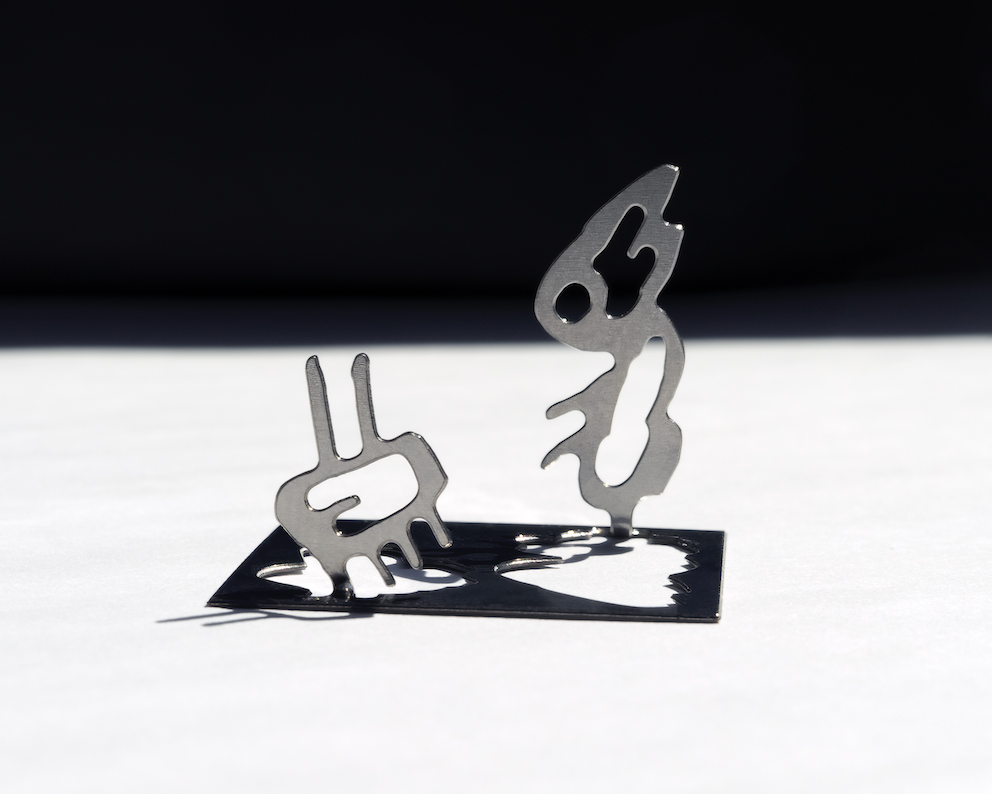
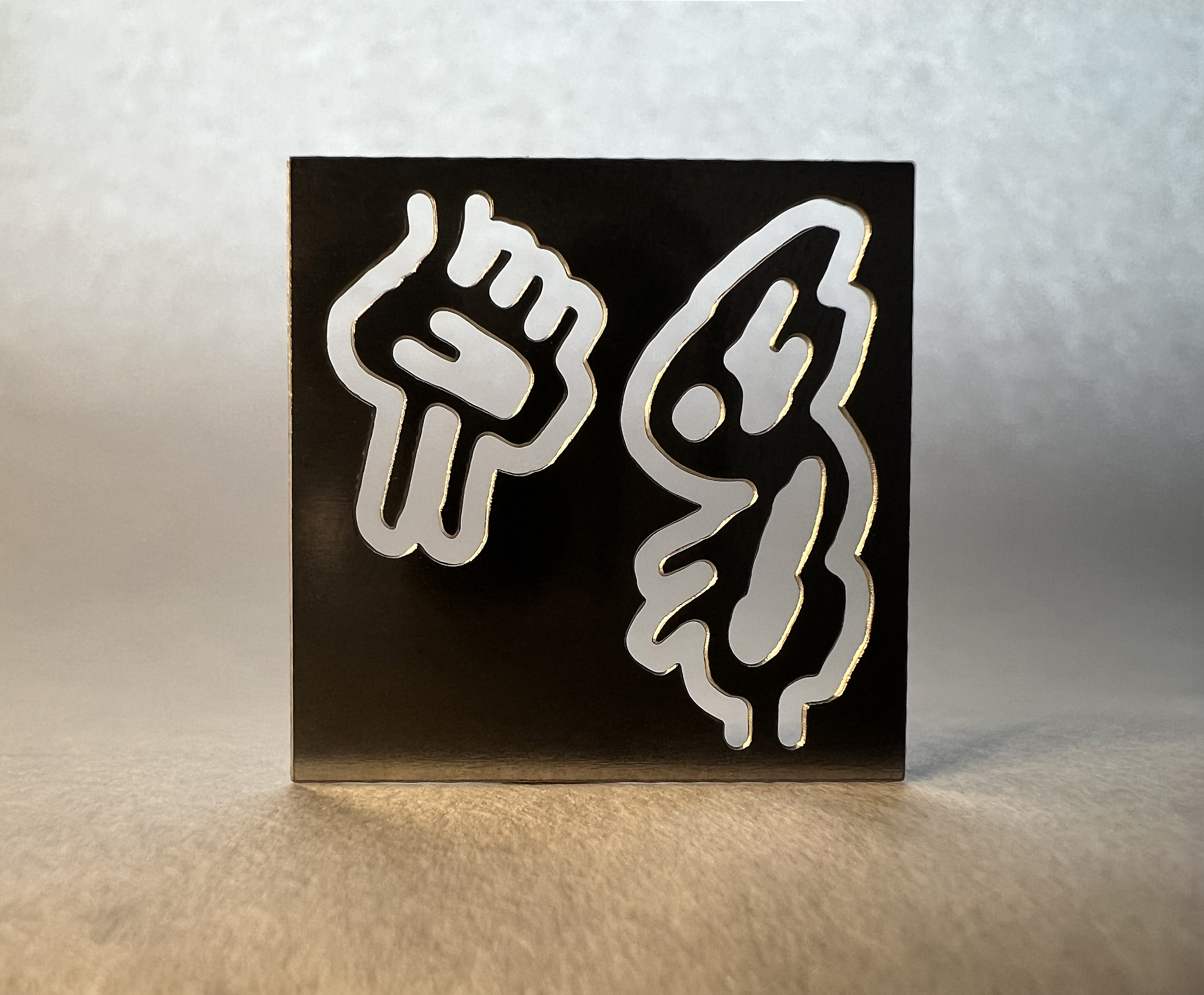
Eduardo Kac, Selenoglyph 1, photochemically milled and electropolished 304 stainless steel, compact: 1” x 1” x 0.01” (25 x 25 x 02.5mm); deployed: 1” x 1” x 0.8” (25 x 25 x 21mm); 2025. Scheduled to fly NET November 2026 integrated into LifeShip's payload on the deck of the FLIP lunar rover. Credit: Kac Studio.

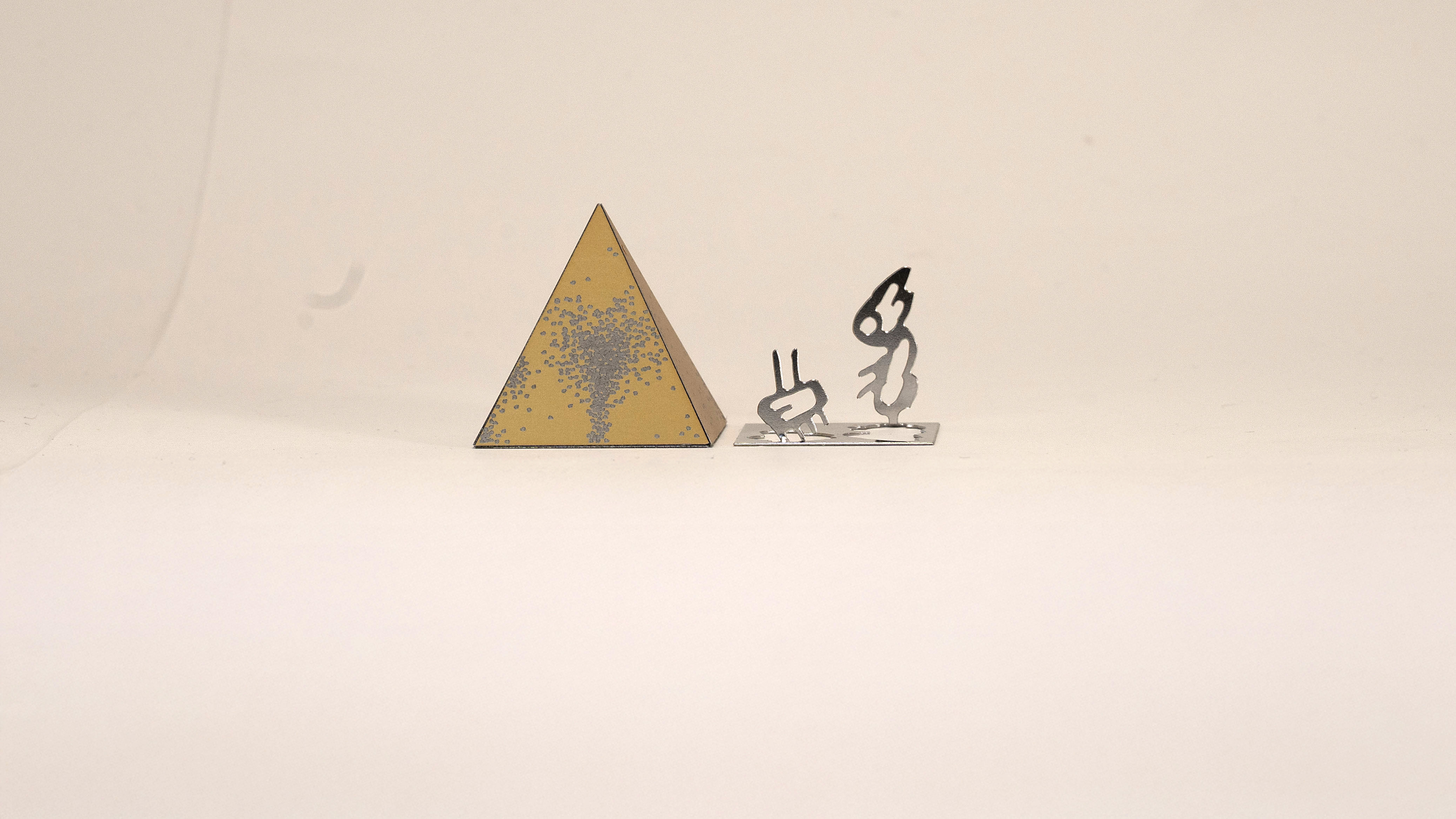
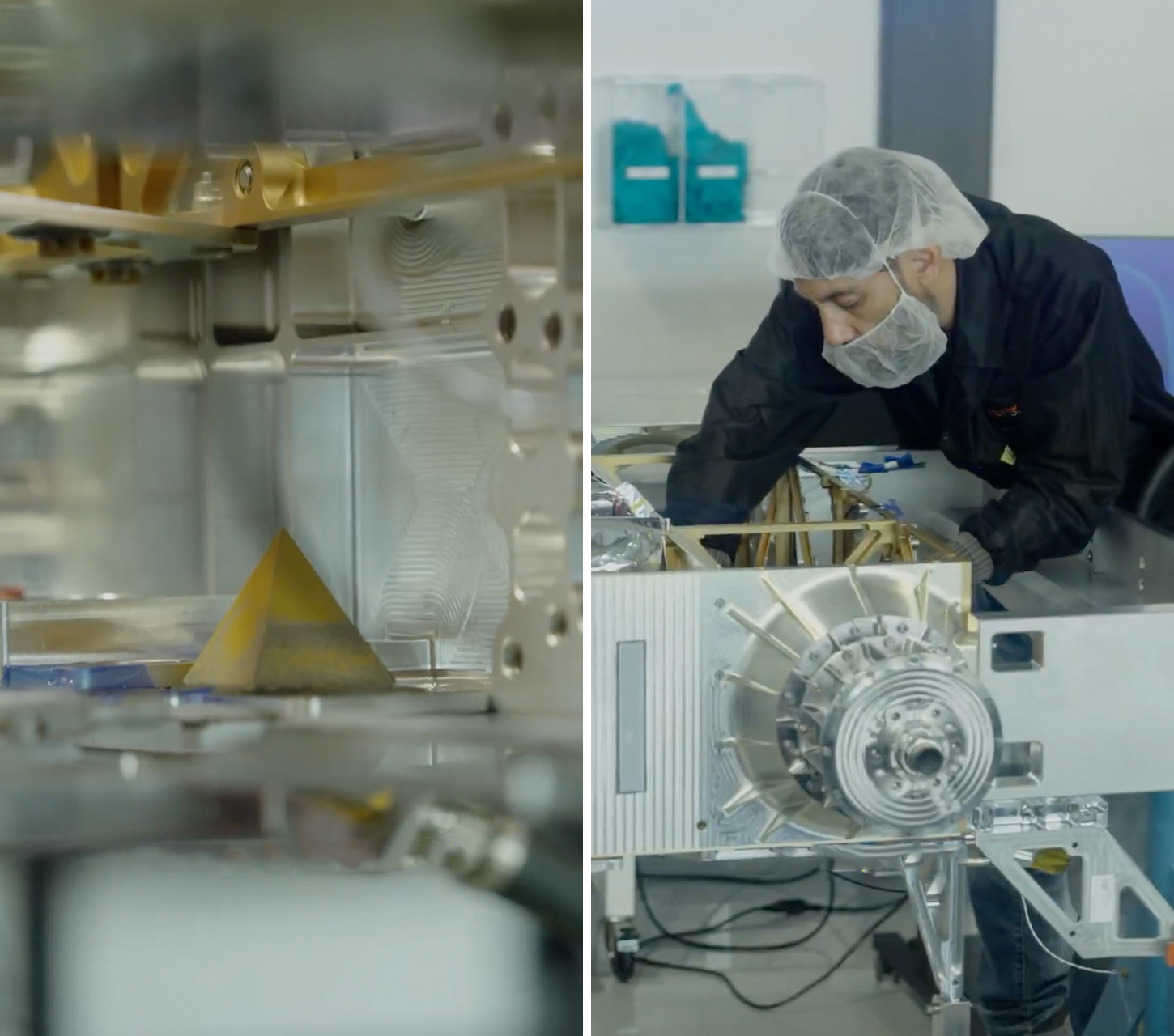
Eduardo Kac, Selenoglyph 1, photochemically milled and electropolished 304 stainless steel, 1” x 1” x 0.8” (25 x 25 x 21mm), 2025 (right) scheduled to fly NET November 2026 within LifeShip's pyramidal payload (left) on the deck of the FLIP lunar rover. Credit: Kac Studio.

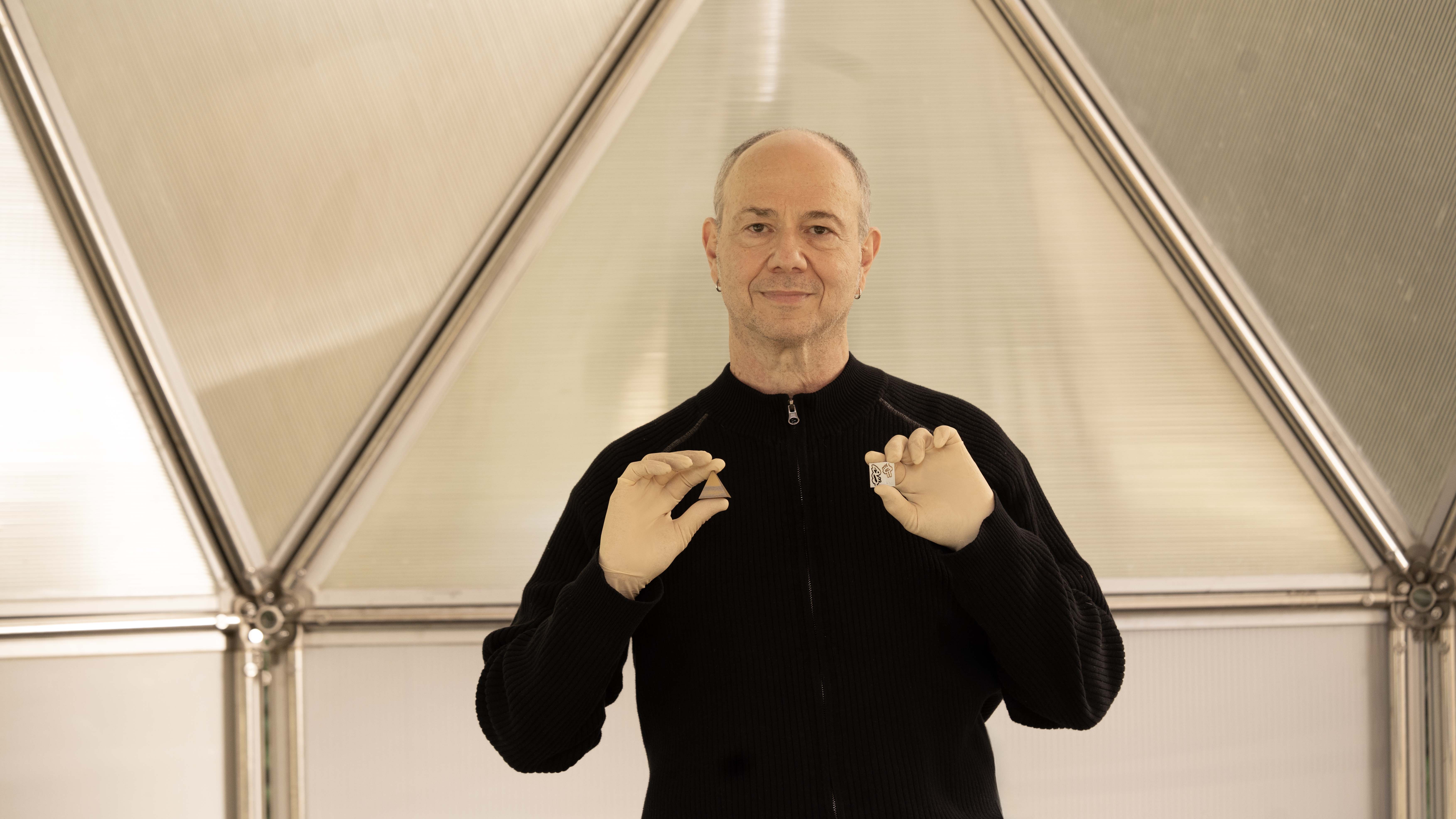
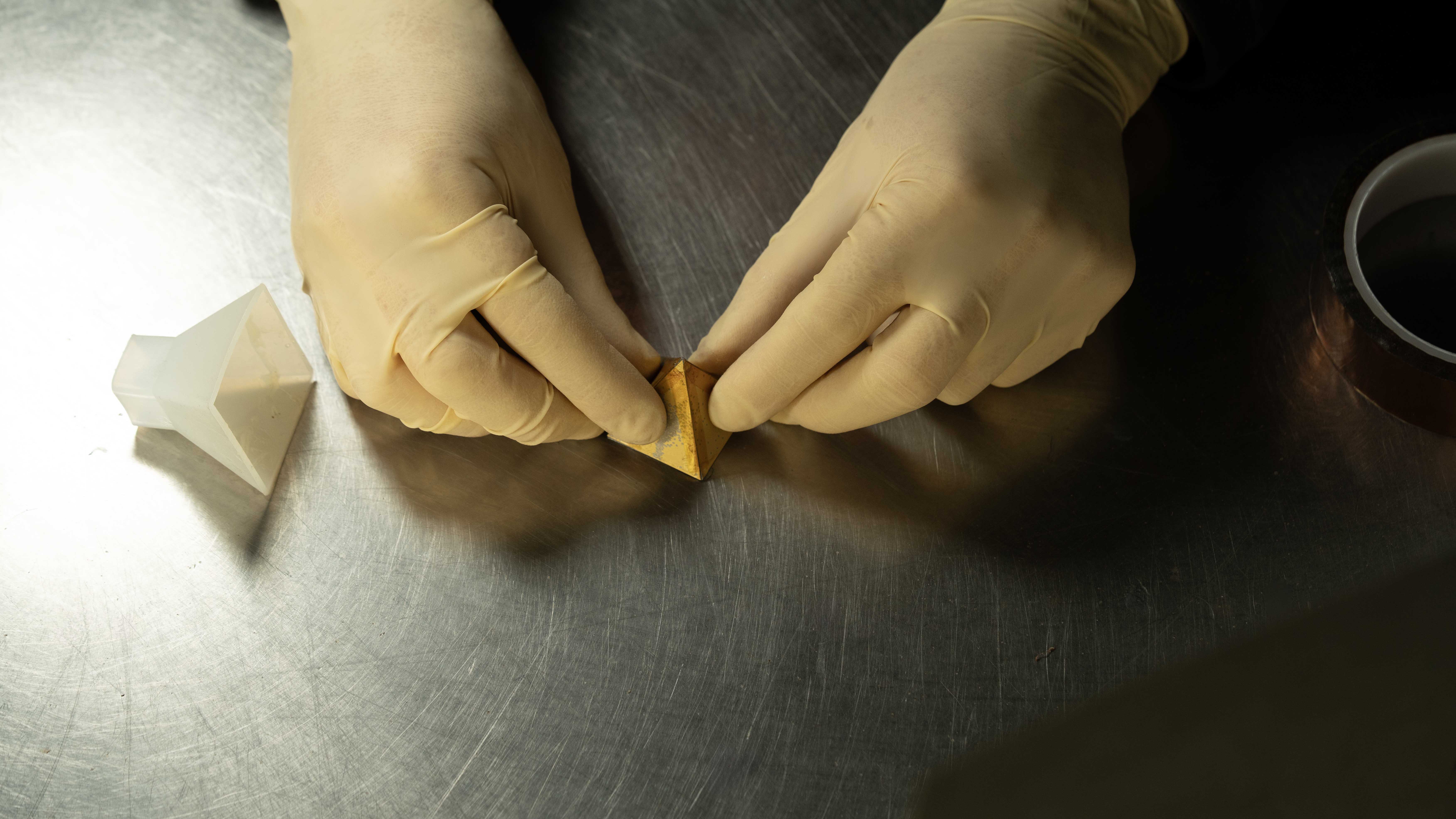
Eduardo Kac working at LifeShip's integration facility in Vista, California, on April 24, 2025, to incorporate his Selenoglyph 1  sculpture (right) into LifeShip’s pyramidal payload (left), which will fly attached to Astrolab’s FLIP rover’s deck aboard Astrobotic’s lunar lander Griffin (Mission 1), NET November 2026. Astrobotic was renamed Voyager Lunar Systems in July 2026. Credit: Kac Studio.

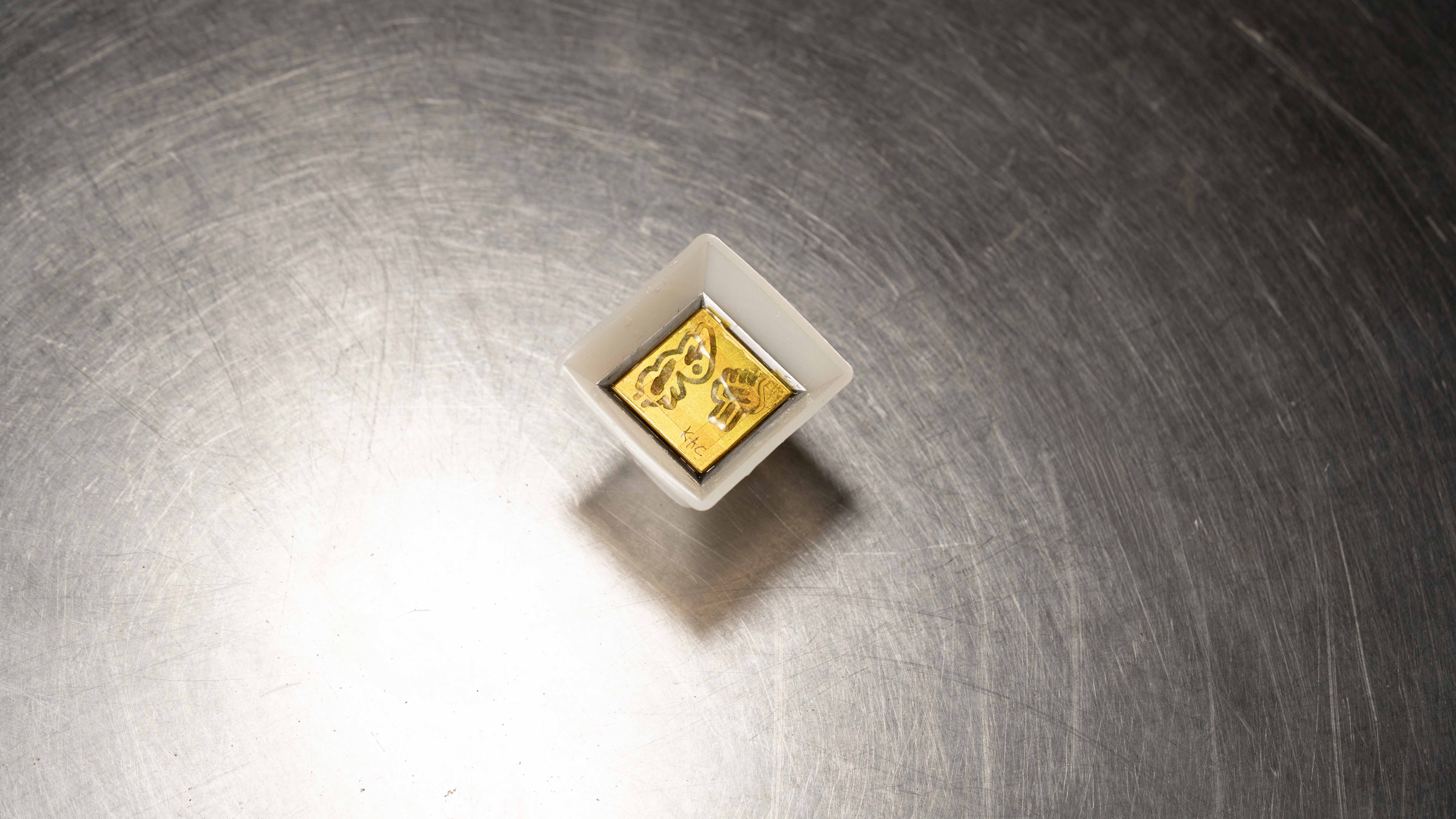
Eduardo Kac’s Selenoglyph 1  sculpture wrapped in protective Kapton film inside LifeShip’s pyramidal payload (shown here upside down, during integration). Kapton film is used in space exploration due its resistance to high temperatures (up to 500 degrees Fahrenheit, equivalent to 260 degrees Celsius). The hottest temperature on the Moon's surface can reach approximately 250 degrees Fahrenheit (120 degrees Celsius). Credit: Kac Studio.

Eduardo Kac’s Selenoglyph 1  sculpture is at the very bottom of LifeShip's assembled pyramidal payload (shown above). Credit: Kac Studio.

On May 18, 2026, LifeShip announced that the pyramidal payload, which contains Kac's Selenoglyph 1, had been integrated into Astrolab's FLIP lunar rover. Credit: Astrolab.

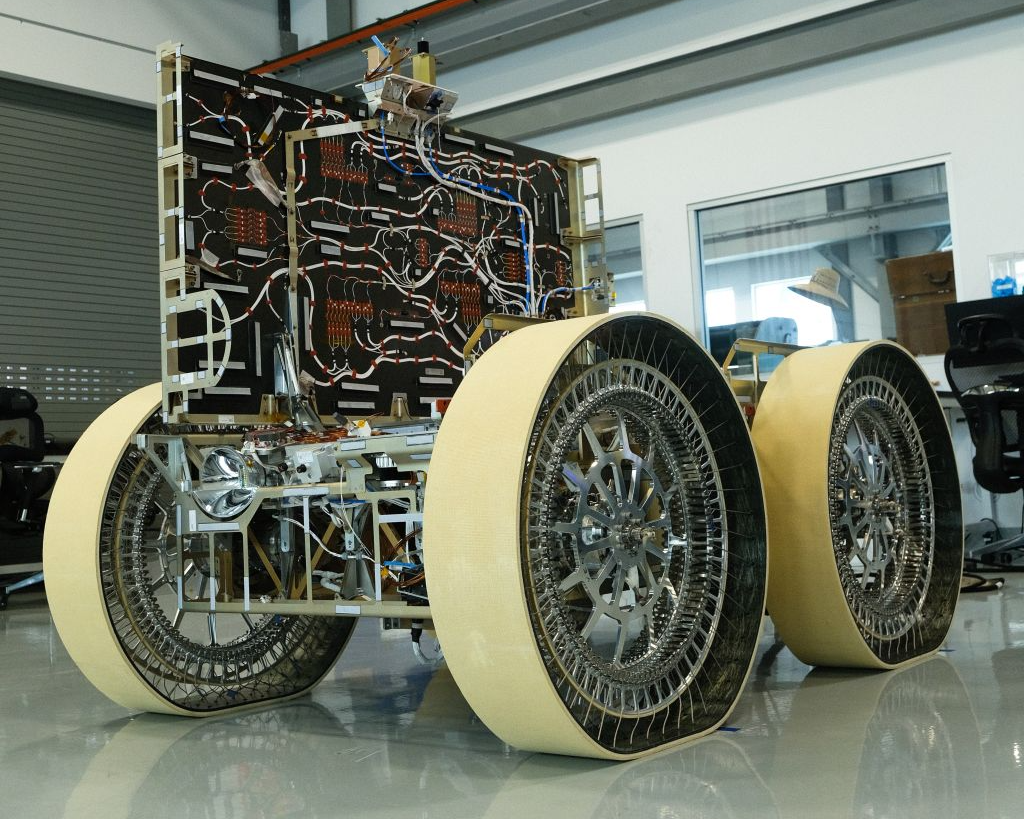
Astrolab’s FLIP rover at the company’s headquarters in Hawthorne, California. The Griffin-1 lander is slated to launch in late 2026 aboard a Falcon Heavy from Kennedy Space Center. Credit: Astrolab.

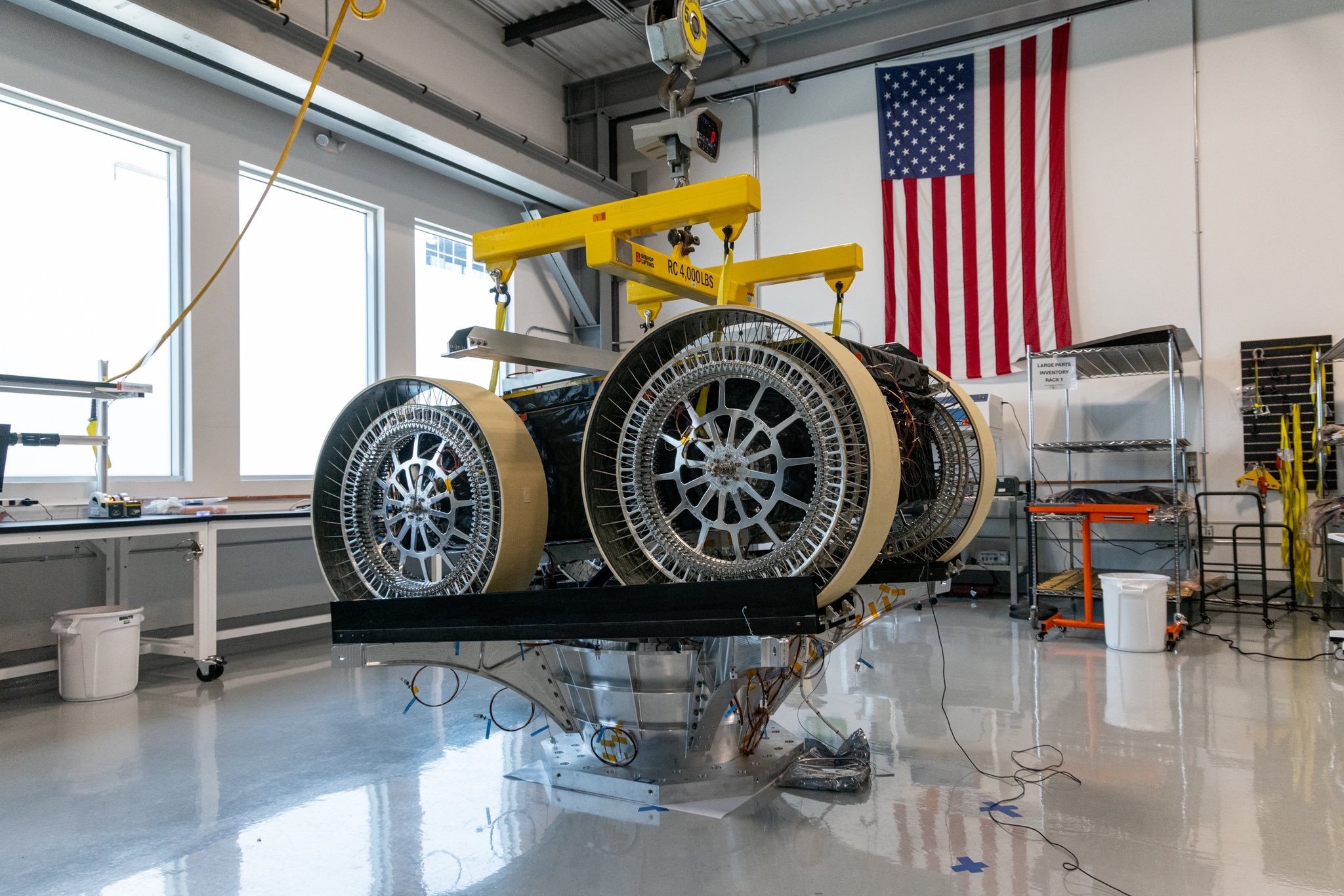
On June 01, 2026, Astrolab’s FLIP rover was stacked and integrated onto the cone and ramps of the Astrobotic Griffin lander. Credit: Astrolab and Astrobotic.

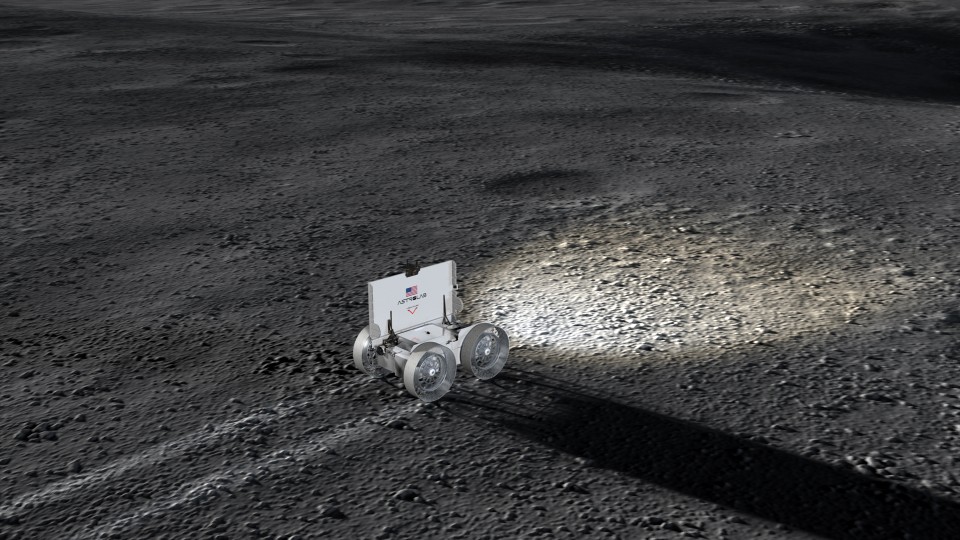
A render of the FLIP rover on the Moon. The solar panel is open (left side of the rover), revealing the deck, where Eduardo Kac’s Moon Lagoglyph  sculpture is located. Credit: Astrolab

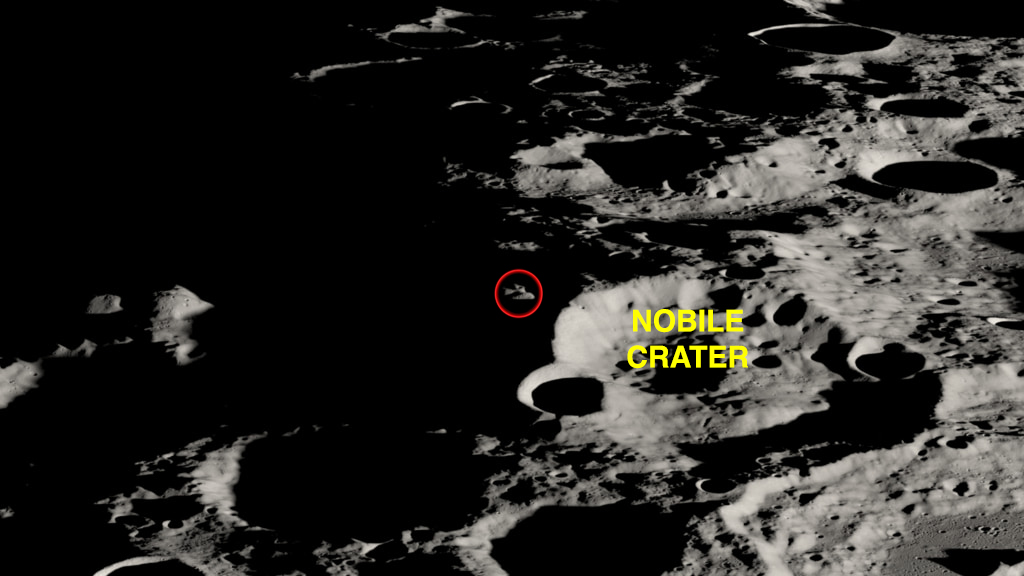
A view of the Griffin landing site (in the red circle) next to Nobile Crater, near the Moon’s South Pole. Credit: Kac Studio based on an image captured by the Lunar Reconnaissance Orbiter. Credit of the source image: NASA’s Scientific Visualization Studio; NASA/GSFC/Arizona State University.

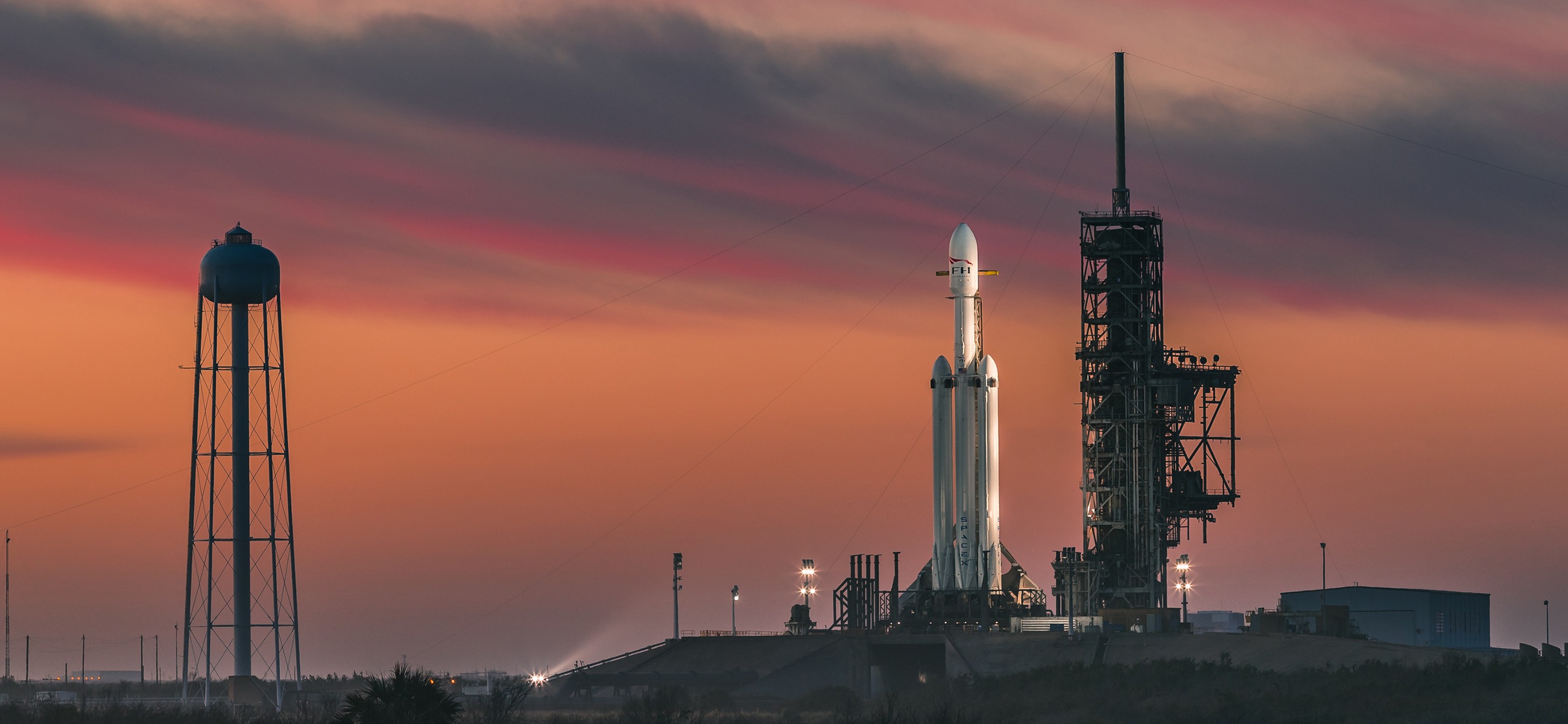
Astrobotic’s Griffin-1 lander is scheduled to launch on a Falcon Heavy in the fourth quarter of 2026, delivering Astrolab's FLIP robotic rover—which includes Kac’s Selenoglyph 1 —to the lunar south pole region. NASA calls this mission Moon Base II, a cornerstone of building its lunar outpost on the surface of the moon. Credit: SpaceX.


Selenoglyph 1 (2025)


When he moved to Paris in 2006, Eduardo Kac began to make works with a distinctive vocabulary of glyphs styled after the artist’s own GFP Bunny (2000). These creatures have an air of mystery—are they cyphers, asemic signs, or do they hold an unrevealable secret? Such enigmatic forms are a hallmark of Kac’s unique art. He titled these works Lagoglyphs and has been developing the series since then, now encompassing sculptures, satellite works, videos, animations, murals, and prints. Based on a series of ink drawings, out of which Kac selected the two forms he used to compose this work, Selenoglyph 1 further extends the series to outer space and, for the first time, to a celestial body.

The extraterrestrial work’s surprising configuration is only partially spurred by the distinctive parameters required in space exploration and is fundamentally girded by a principle of inventiveness that is Kac’s own. On the one hand, the method of glyph writing of ancient civilizations acquires new potency in the artist’s highly unique and forward-looking system. On the other, Kac’s deft approach to materials has allowed him to make a durable sculpture out of stainless steel within the confines of an infinitesimal payload.

Selenoglyph 1  is the first work in the Lagoglyph  series to expand its green-black bichrome palette to the natural silver hue of steel. This chromatic shift is a decisive turning point: the raw color of metal becomes an active element in the meaning of the lagoglyph, transforming its graphic identity into a lunar sign whose material brightness and resilience are inseparable from its poetic force.

Throughout his career, the artist-poet has created works in which the literary is rendered experiential and the visual is poetically articulated through precision, concision, and world-shaping imagination. Selenoglyph 1 (2025) combines, for the first time, the gestural brushwork of Kac’s Lagoglyph  series, in development since 2006, with the physicality and durability inherent in the development of lunar cultural practice.