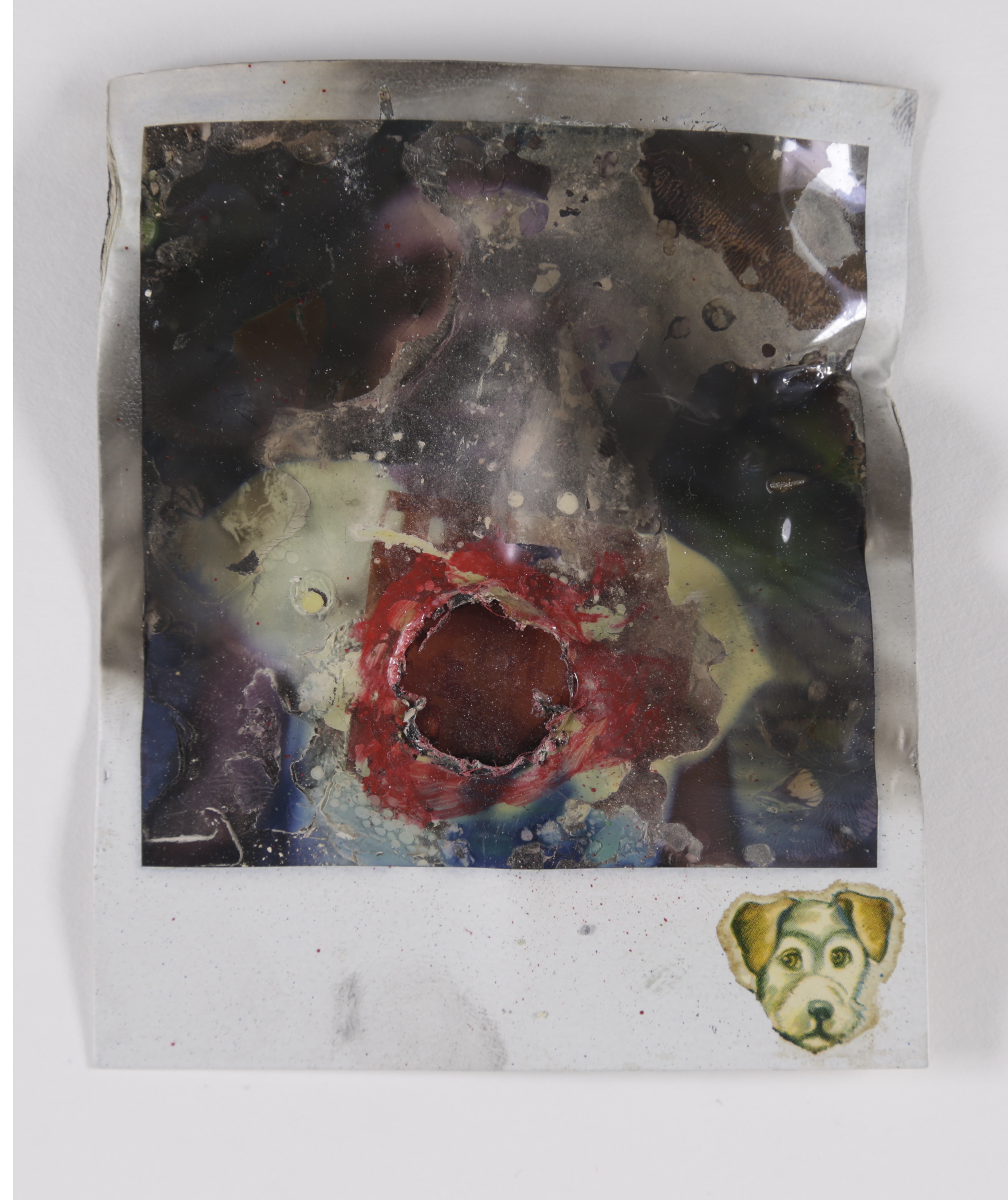
In 1983 Eduardo Kac created a body of work composed of 23 photo-objects based on the iconic SX-70.
Eduardo Kac, "Untitled I," Polaroid SX-70 and mixed media, 1983, 4.2 x 3.5 inches (10.7 x8.8 cm)
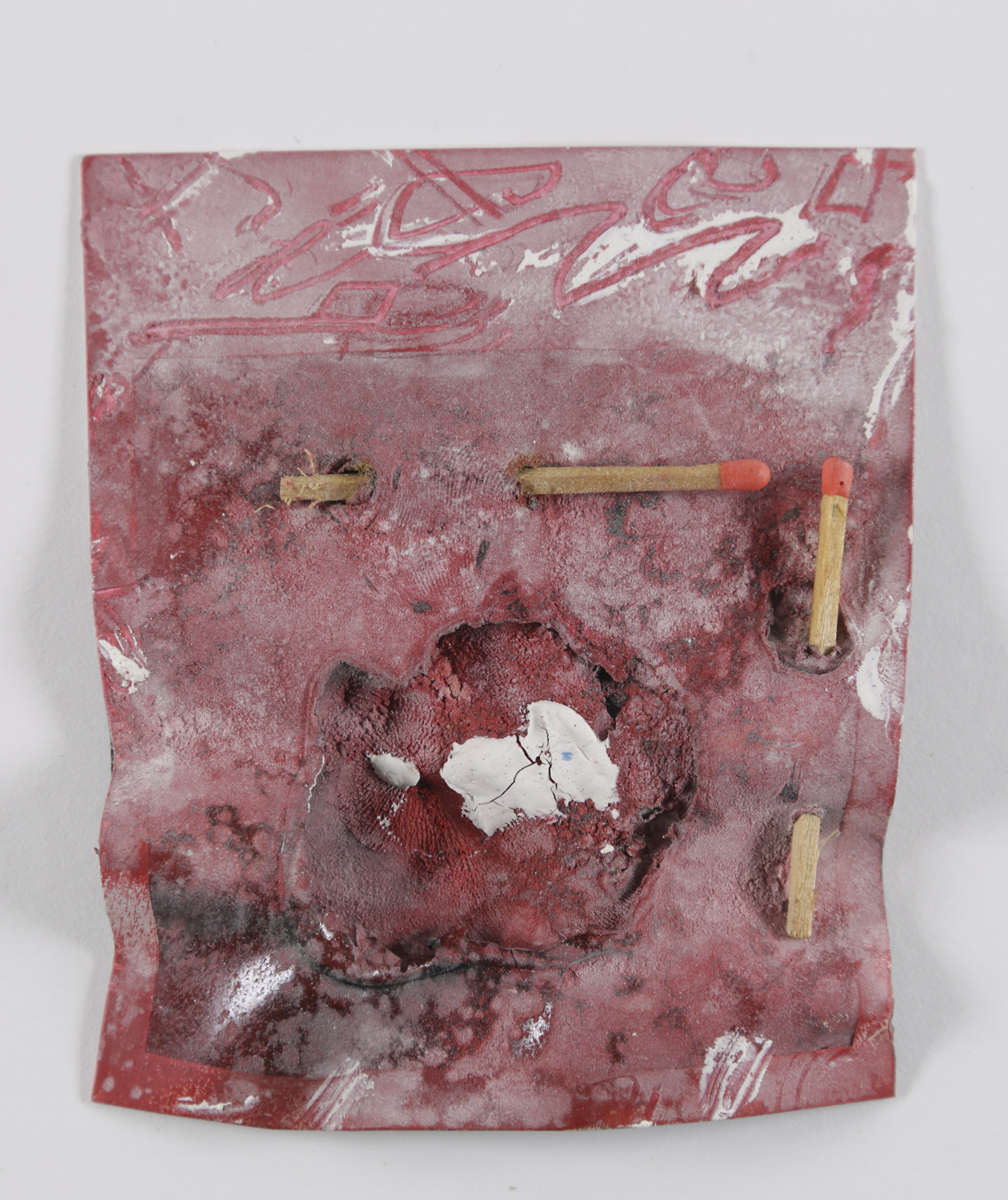
Eduardo Kac, "Untitled II," Polaroid SX-70 and mixed media, 1983, 4.2 x 3.5 inches (10.7 x8.8 cm)
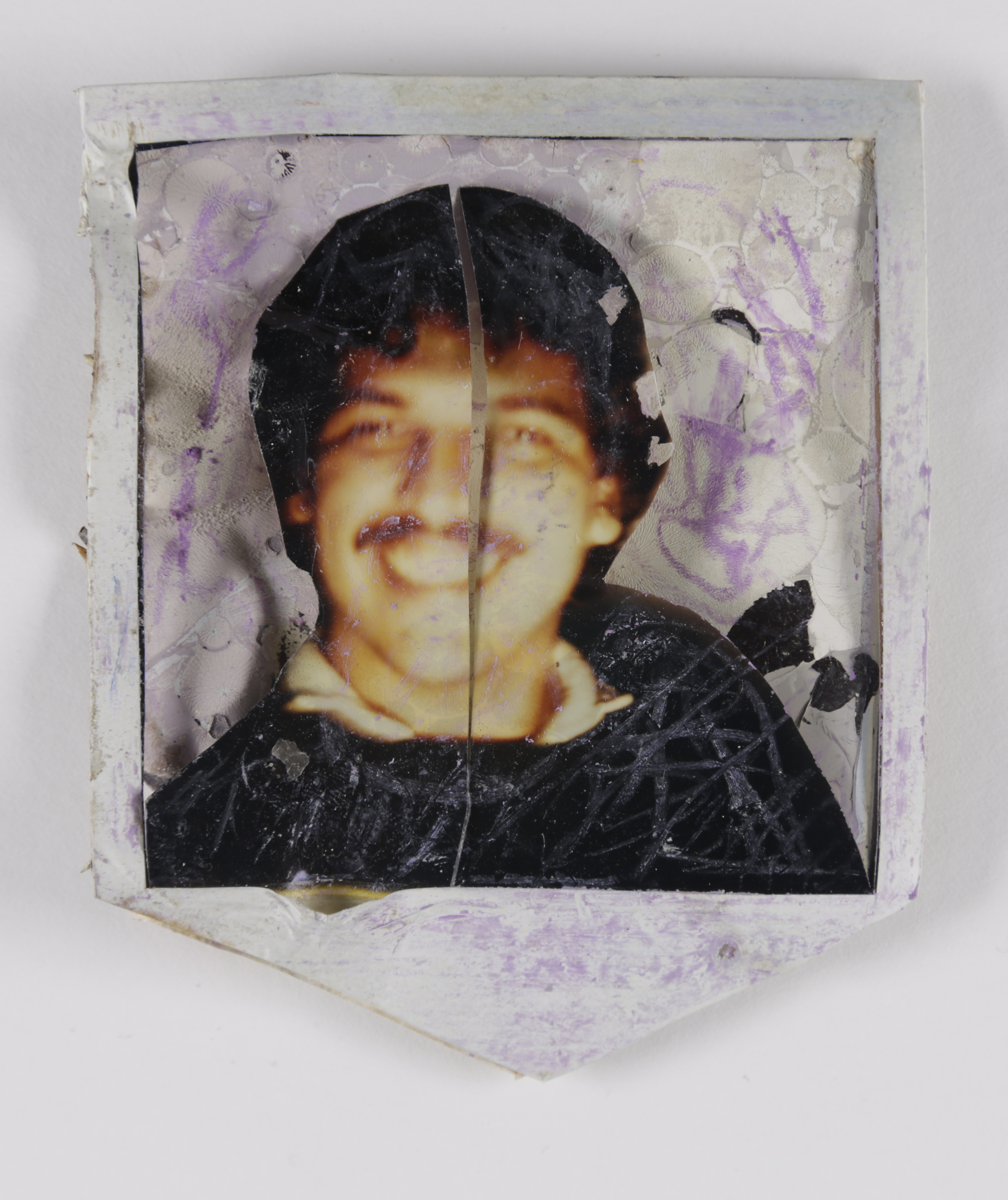
Eduardo Kac, "Untitled III," Polaroid SX-70 and mixed media, 1983, 4.2 x 3.5 inches (10.7 x8.8 cm)
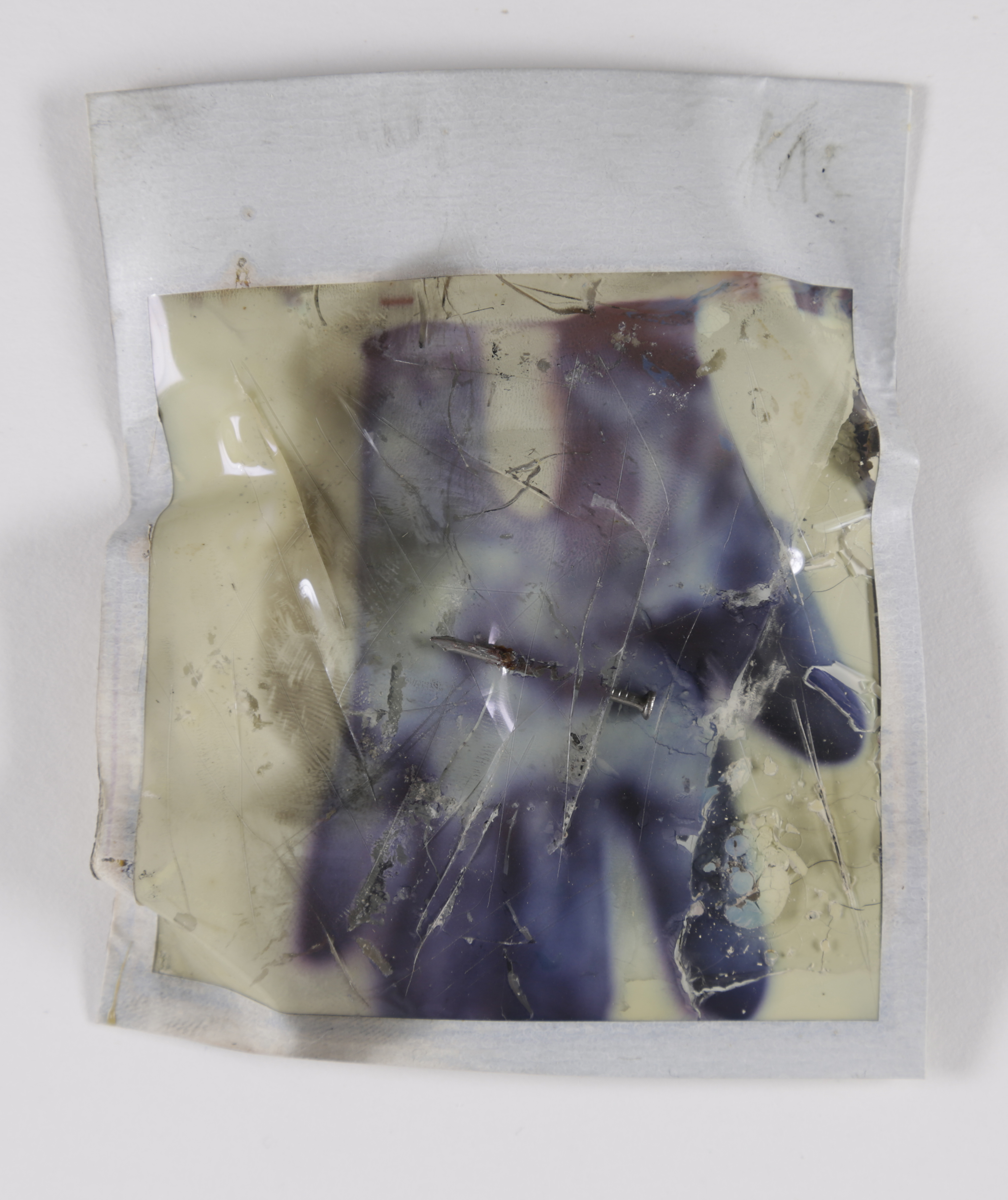
Eduardo Kac, "Untitled IV," Polaroid SX-70 and mixed media, 1983, 4.2 x 3.5 inches (10.7 x8.8 cm)
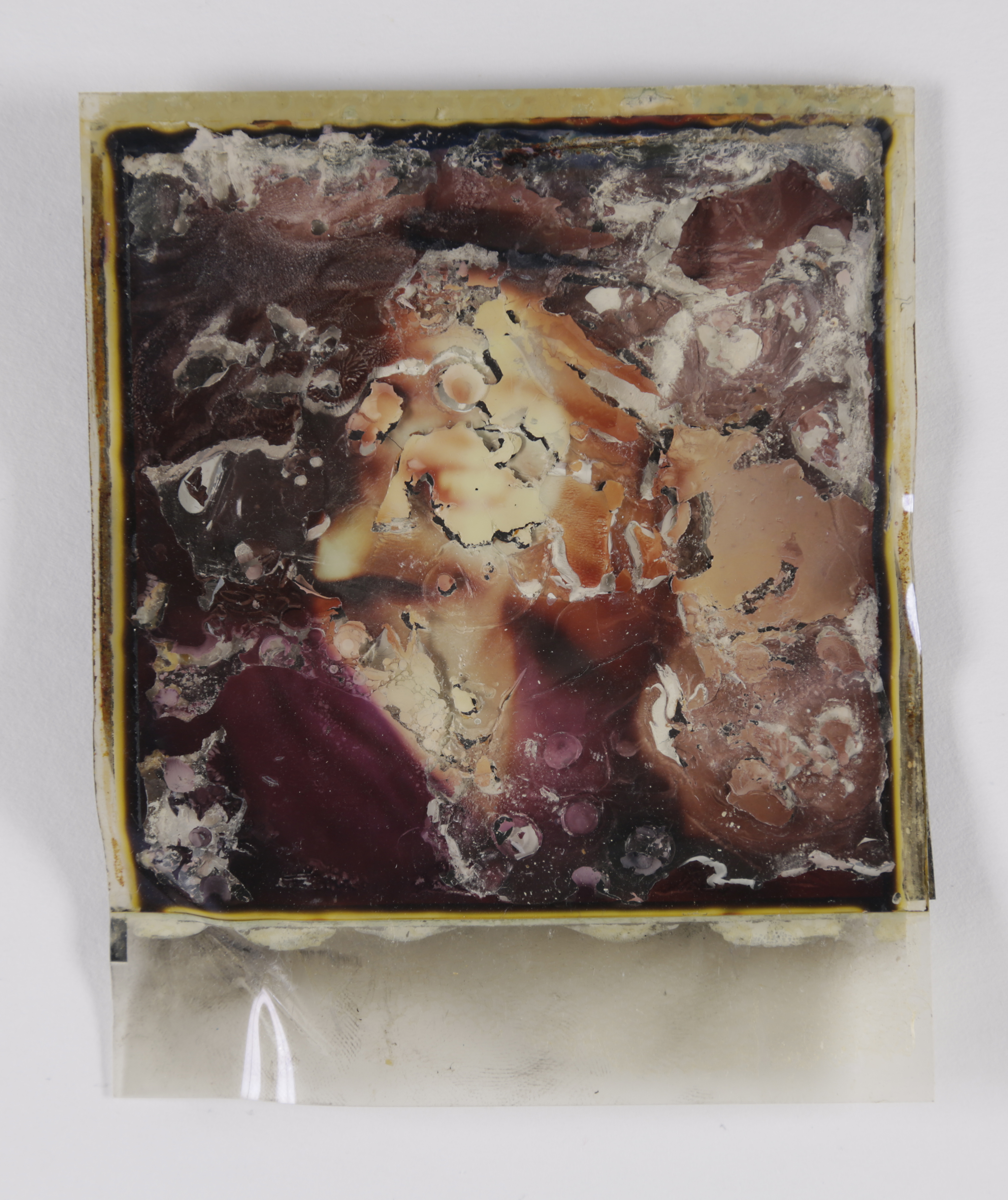
Eduardo Kac, "Untitled V," Polaroid SX-70 and mixed media, 1983, 4.2 x 3.5 inches (10.7 x8.8 cm)
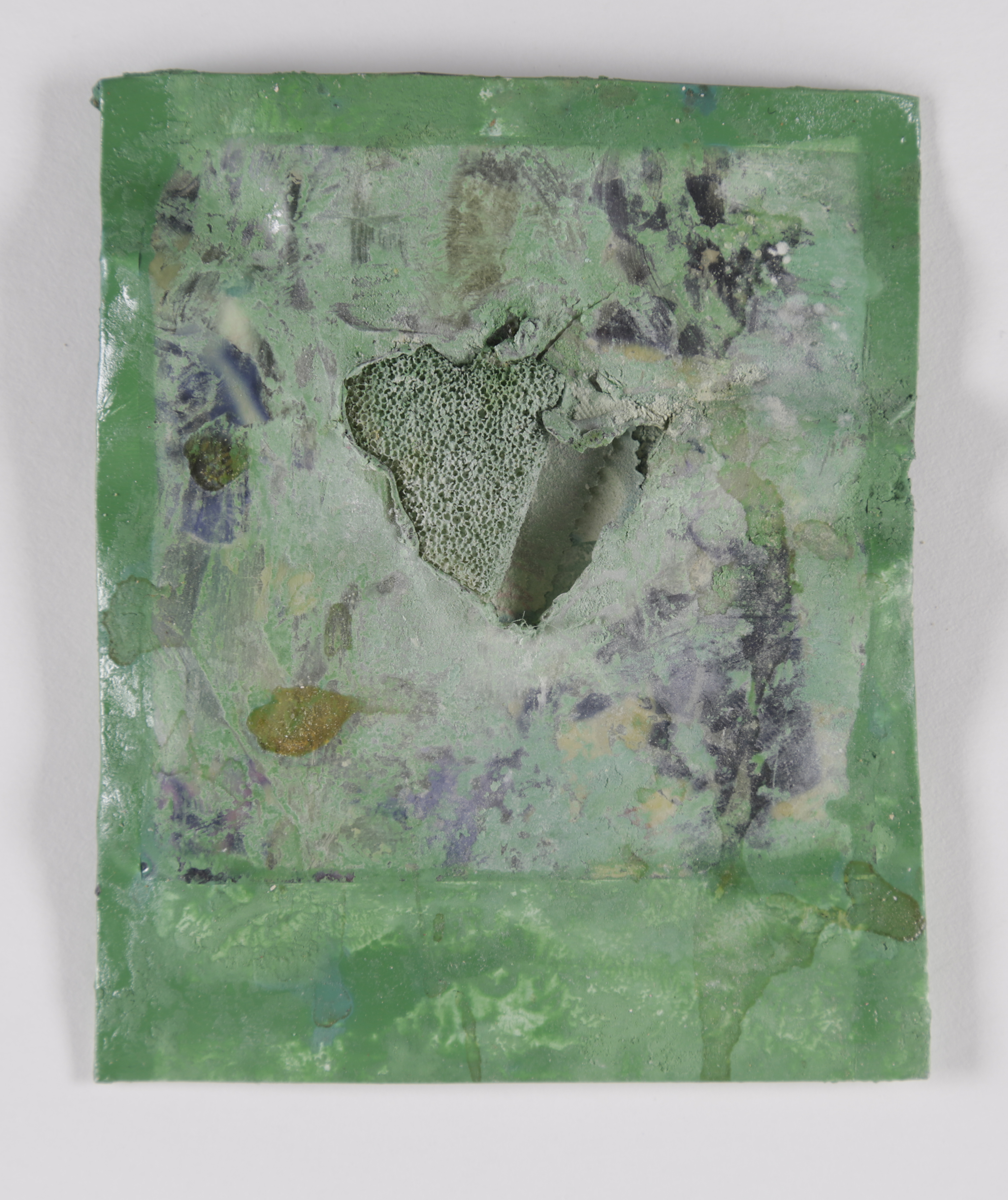
Eduardo Kac, "Untitled VI," Polaroid SX-70 and mixed media, 1983, 4.2 x 3.5 inches (10.7 x8.8 cm)
Eduardo Kac (b. 1962) is recognized for his foundational role in the creation and development of unique forms such as holopoetry, telepresence, bio art, and space art. Kac’s career started in 1980 with a practice that hybridized public actions and multimedia interventions in urban settings, economies of circulation, and networks. His sustained crafting of new directions for art and poetry is characterized by a radical, interdisciplinary approach.
In 1983, he produced an imaginative body of work with the iconic Polaroid SX-70, using the camera as a matrix to generate portable sculptural works. The twenty-three pieces he created that year share a common origin in the point-click-print immediacy that characterized the SX-70 integral instant film. From Kac’s handling of the compact cult classic, each work departed in a different direction, branching into distinct material and visual territories.
These works exemplify the wide-ranging ways Kac experimented with iteration, singularity, heterogeneity, and irreproducibility, with particular emphasis on his commitment to creative writing and the body. Kac capitalized on the promptness, spontaneity, and intimacy offered by the Polaroid SX-70 to expand his ideas about art and the self during a time of profound personal and social shifts. From his lens emerged a series of photosculptures in which his circle of friends and family were fused with early ’80s mass culture detritus.
“In Inimagens, I transformed Polaroid photos into three-dimensional objects. In a photo of my family together, I placed a miniature revolver. The photo of my girlfriend appeared completely charred, and in another, I took my grandfather and turned him into a rattle. At the national exhibition [Salão Nacional], I saw children pulling their parents closer to get a better look at this work, while at the same time I saw intellectuals, notebooks in hand, taking notes,” Kac said at the time to the O Globo newspaper. “I try to integrate formal research with a theme that is familiar to people.”
Kac pushed the technology’s limits by intervening during chemical processing, increasing the temperature until the image degraded, and exploring the insertion of objects between the polyester cover sheet and the backing. He created dimensional effects by partially lifting image layers, evoked the tearing and weathering of natural decay by removing parts of an image from within, and produced a phantasmatic effect by combining soft focus with carefully drawn lines that suggest electrical discharges around an object. Ultimately, these photosculptures reflect Kac’s drive to push artistic mediums beyond their traditional limits, inviting viewers to reconsider the relationship between memory, materiality, and meaning.