BIO ART
Transgenic works and other living pieces


Bibliography on Eduardo Kac's Bio Art


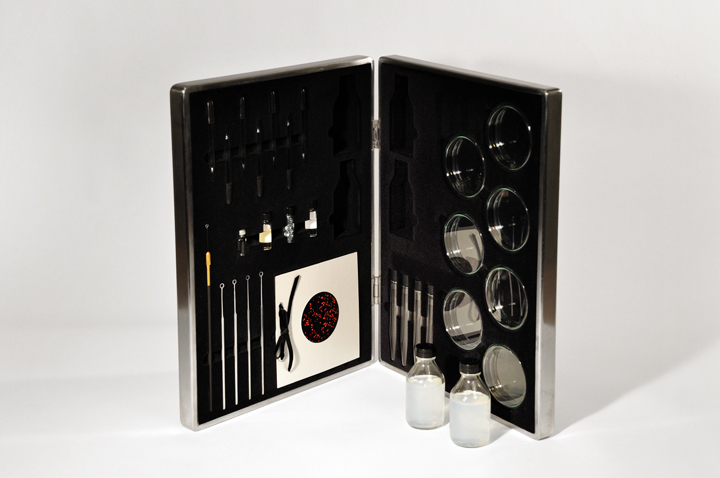
Cypher (2009) is an artwork that merges sculpture, artist's book and a DIY transgenic kit. It measures approximately 13 x 17 " (33 x 43 cm) and is contained in a stainless steel slipcase. When removed from the case, the kit — itself also made of stainless steel — opens up in two halves, like a book. Inside the viewer/user finds a portable minilab. The kit contains Petri dishes, agar, nutrients, streaking loops, pipettes, test tubes, synthetic DNA (encoding in its genetic sequence a poem Kac wrote specifically for this artwork), and a booklet containing the transformation protocol—each in its respective compartment. The key poetic gesture in "Cypher" is to place in the hands of the viewer the decision and the power to literally give life to the artwork. Commissioned by Rurart, France.
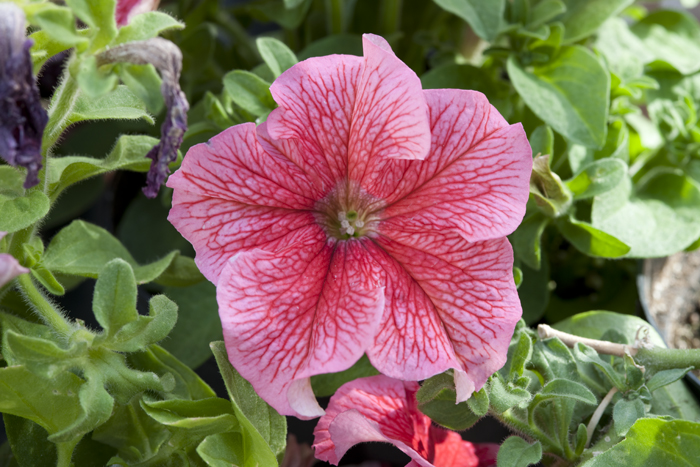
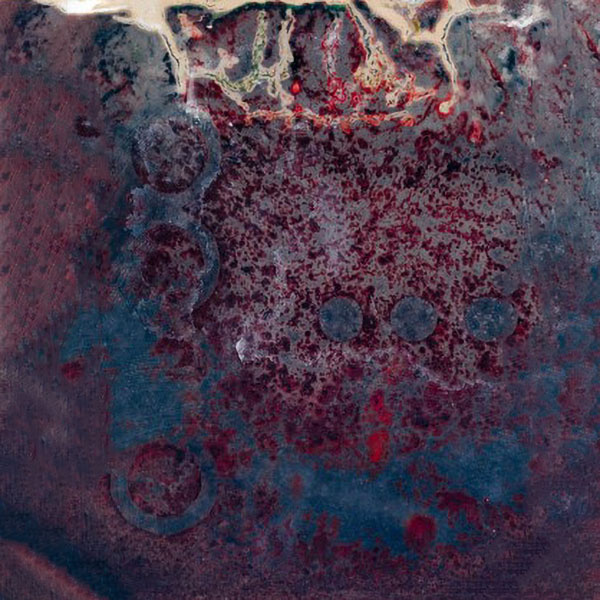
Natural History of the Enigma (2003/08) -- The central work in the "Natural History of the Enigma" series is a plantimal, a new life form Kac created and that he calls "Edunia", a genetically-engineered flower that is a hybrid of Kac and Petunia. The Edunia expresses Kac's DNA exclusively the red veins of the flower. The gene Kac selected is responsible for the identification of foreign bodies. In this work, it is precisely that which identifies and rejects the other that the artist integrates into the other, thus creating a new kind of self that is partially flower and partially human. Developed between 2003 and 2008, and first exhibited from April 17 to June 21, 2009 at the Weisman Art Museum, in Minneapolis, "Natural History of the Enigma" also encompasses a large-scale public sculpture, a print suite, photographs, and other works.
Collection Weisman Art Museum, Minneapolis.

Specimen of Secrecy about Marvelous Discoveries (2004/06) -- "Specimen of Secrecy about Marvelous Discoveries" is a series of works comprised of what Kac calls "biotopes", that is, living pieces that change during the exhibition in response to internal metabolism and environmental conditions. Each of Kac’s biotopes is literally a self-sustaining ecology comprised of thousands of very small living beings in a medium of earth, water, and other materials. The artist orchestrates the metabolism of these organisms in order to produce his constantly-evolving living works.

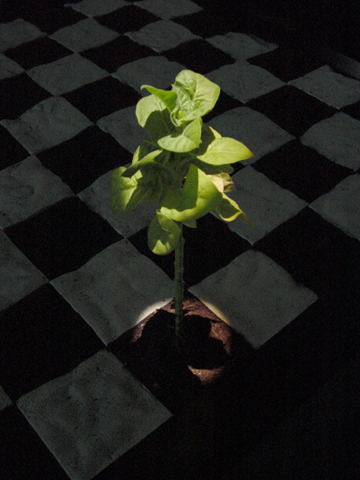
Move 36 (2002/04) -- "Move 36" explores the permeable boundaries between the human and the nonhuman, the living and the nonliving. The title of "Move 36" refers to the dramatic chess move made by computer Deep Blue against world champion Gary Kasparov in 1997 -- a chess match between the best player that ever lived and the best player that never lived. The installation includes a plant, especially created for the work, that uses the universal computer code (called ASCII) to produce a "Cartesian" gene, that is, a translation of Descartes' ontological statement "Cogito ergo sum" into a gene. As viewers walk into the space, they see a chessboard made of sand and earth, flanked by digital projections that evoke the players in absentia. The plant is rooted precisely in the square where the computer defeated the human, that is, where the "move 36" was made.
Edition of 3. Collection Alfredo Hertzog da Silva.

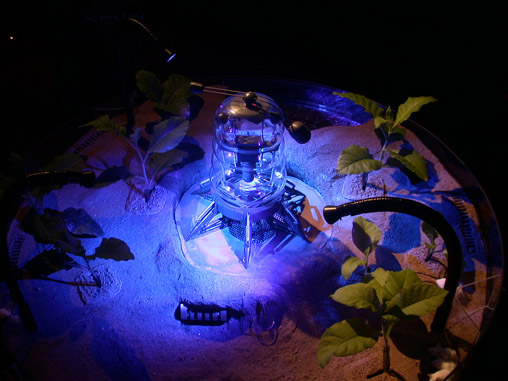
The Eighth Day (2001) -- The Eighth Day is a transgenic artwork that investigates the new ecology of fluorescent creatures that is evolving worldwide. The Eighth Day was shown from October 25 to November 2, 2001 at the Institute for Studies in the Arts, Arizona State University, Tempe. While fluorescent creatures are being developed in isolation in laboratories, seen collectively they form the nucleus of a new and emerging synthetic bioluminescent system. The piece brings together living transgenic life forms and a biological robot (biobot) in an environment enclosed under a clear 4 foot diameter Plexiglas dome, thus making visible what it would be like if these creatures would in fact coexist in the world at large. The Eighth Day presents an expansion of biodiversity beyond wildtype life forms. As a self-contained artificial ecological system it resonates with the words in the title, which add one day to the period of creation of the world as narrated in the Judeo-Christian Scriptures. All of the transgenic creatures in The Eighth Day are created through the cloning of a gene that codes for the production of green fluorescent protein (GFP). As a result, all creatures express the gene through bioluminescence visible with the naked eye. The transgenic creatures in "The Eighth Day" are GFP plants, GFP amoebae, GFP fish, and GFPmice.

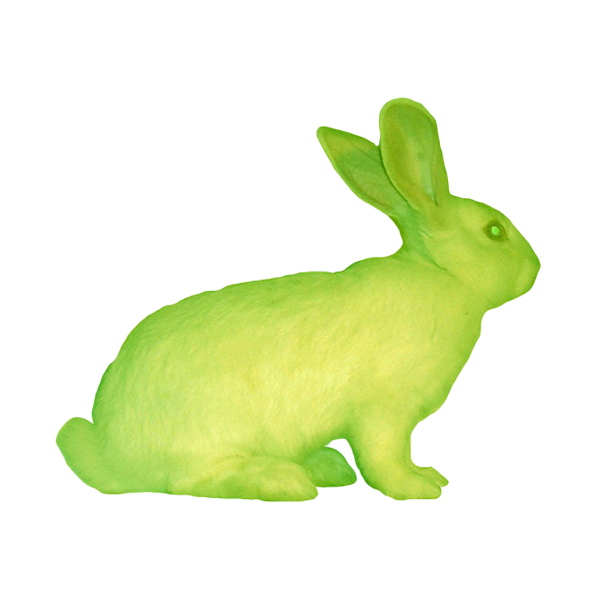
GFP Bunny (2000) -- With GFP Bunny Kac welcomes Alba, the green fluorescent rabbit, and explains that transgenic art must be created "with great care, with acknowledgment of the complex issues at the core of the work and, above all, with a commitment to respect, nurture, and love the life thus created." The first phase of the GFP Bunny project was completed in February 2000 with the birth of "Alba" in Jouy-en-Josas, France. The second phase is the ongoing debate, which started with the first public announcement of Alba's birth, made by Kac in the context of the Planet Work conference, in San Francisco, on May 14, 2000. The third phase will take place when the bunny comes home to Chicago, becoming part of Kac's family and living with him from that point on.

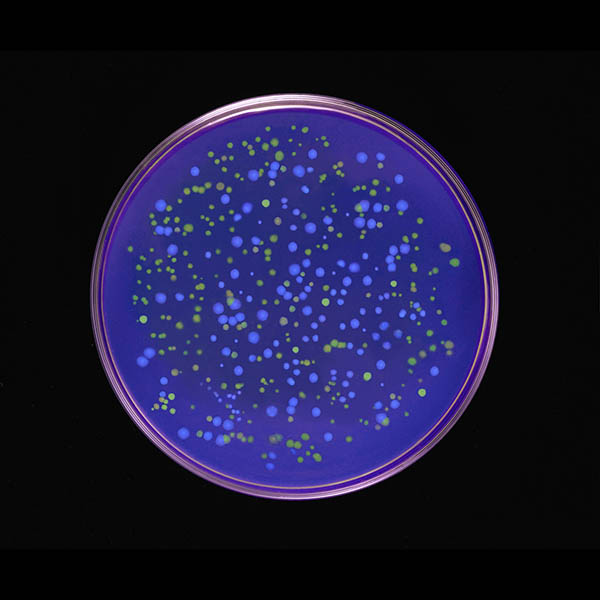
Genesis (1999) -- Genesis was commissioned by Ars Electronica 99 and presented online and at the O.K. Center for Contemporary Art, Linz, from September 4 to 19, 1999. Genesis is a transgenic artwork that explores the intricate relationship between biology, belief systems,information technology, dialogical interaction, ethics, and the Internet. The key element of the work is an "artist's gene", a synthetic gene that was created by Kac by translating a sentence from the biblical book of Genesis into Morse Code, and converting the Morse Code into DNA base pairs according to a conversion principle specially developed by the artist for this work. The sentence reads: "Let man have dominion over the fish of the sea, and over the fowl of the air, and over every living thing that moves upon the earth." It was chosen for what it implies about the dubious notion of divinely sanctioned humanity's supremacy over nature. The Genesis gene was incorporated into bacteria, which were shown in the gallery. Participants on the Web could turn on an ultraviolet light in the gallery, causing real, biological mutations in the bacteria. This changed the biblical sentence in the bacteria. The ability to change the sentence is a symbolic gesture: it means that we do not accept its meaning in the form we inherited it, and that new meanings emerge as we seek to change it. The exhibition history of Genesis can be seen here.
Edition of 2. Collection Instituto Valenciano de Arte Moderno (IVAM), Valencia, Spain.

GFP K-9 (1998-ongoing) -- See: "Transgenic Art", first published in Leonardo Electronic Almanac (ISSN 1071-4391), Volume 6, Number 11, 1998. This paper discusses the GFP K-9 project, which aspires to create a healthy transgenic dog, integrate it socially and -- as in GFP Bunny -- provide him or her with a loving home (in this case, the artist's own).


Back to Kac Web